Table of Contents
AV is one of the easiest conference costs to underestimate.
A venue may advertise built-in screens and microphones, but a professional conference often needs much more than a projector and a speaker system. Sound, lighting, staging, playback, presentation management, recording, livestreaming, technical crew and backup systems can all sit behind what looks like a simple stage.
That is why AV for events should be budgeted as part of the core event experience, not treated as a last-minute technical add-on.
Good AV is rarely noticed. Poor AV is immediately obvious.
If delegates cannot hear a speaker, read a presentation or follow a remote presenter, the quality of the content stops mattering.
What Is AV for an Event?
AV stands for audio visual.
In event production, it refers to the technology and technical systems used to help an audience see, hear and experience the program.
For a conference, that can include:
-
microphones
-
speakers
-
mixing desks
-
presentation screens
-
projectors
-
LED screens
-
stage lighting
-
lecterns
-
confidence monitors
-
laptops and presentation switching
-
cameras
-
recording
-
livestreaming
-
video playback
-
stage management
-
technical operators.
The exact setup depends on the size and format of the event.
A 50-person workshop may only need a screen, wireless microphone and basic audio.
A 500-person conference with multiple presenters, videos, live cameras and remote speakers requires a much more substantial production system.
How Much Does AV Cost for a Conference?
There is no single conference AV cost that applies to every event.
As a broad planning guide, AV can range from a few thousand dollars for a simple small-room setup to tens of thousands for a larger conference with staging, lighting, screens, cameras and multiple technicians.
Large conferences, multi-room programs and highly produced events can exceed that significantly.
The final cost is influenced by:
-
room size
-
audience numbers
-
number of rooms
-
stage design
-
screen size
-
sound requirements
-
lighting
-
cameras
-
livestreaming
-
recording
-
event duration
-
rehearsal time
-
labour
-
bump-in and bump-out requirements.
Rather than asking, “How much should AV cost?”, it is more useful to ask:
What does the audience need to see and hear, and what production is required to deliver that reliably?
What AV Equipment Is Needed for a Conference?
A typical conference may require several layers of technology.
Audio
At minimum, speakers need to be heard clearly throughout the room.
That may require:
-
wireless handheld microphones
-
lapel microphones
-
lectern microphones
-
audience microphones
-
speakers
-
audio mixing equipment.
Panel discussions often need more microphones than organisers initially expect.
If six people are appearing on stage, sharing two microphones can slow down the conversation and make the session feel less professional.
Screens and Visual Display
Presentation content needs to be readable from every part of the room.
Depending on the venue, this might involve:
-
projection
-
large-format displays
-
LED screens
-
multiple screens
-
confidence monitors for presenters.
Large rooms may need several screens to avoid guests turning or straining to read slides.
Presentation Management
Professional conferences often use a dedicated presentation system rather than allowing speakers to connect individual laptops directly to the screen.
This makes it easier to:
-
preload presentations
-
switch between speakers
-
play videos
-
manage different file formats
-
reduce delays between sessions.
It also gives the production team more control if something goes wrong.
Lighting
Conference lighting is not only decorative.
Speakers need to be clearly visible both to the room and, where relevant, to cameras.
Stage lighting can also help separate the presentation area from the audience and give the event a more polished appearance.
Staging
Staging can include:
-
stage platforms
-
lecterns
-
furniture
-
branded scenic elements
-
steps and access
-
backdrop systems.
The cost changes depending on whether you need a simple raised platform or a custom-designed stage environment.
Where Does the AV Budget Actually Go?
A common misconception is that most AV expenditure goes into equipment hire.
Equipment is only part of it.
Technical Crew
People operate the systems.
A conference might require:
-
audio technicians
-
lighting operators
-
vision switchers
-
presentation technicians
-
camera operators
-
livestream technicians
-
stage managers
-
show callers.
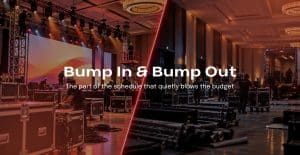
Crew costs increase with event duration, rehearsals and extended bump-in or bump-out schedules.
Setup and Testing
AV needs to be installed, connected and tested before attendees arrive.
For larger conferences, the technical team may be working well before the first guest enters the venue.
Complex setups can require an entire day or more before the event itself.
Backup Systems
Professional production often includes redundancy.
That may mean spare microphones, backup playback laptops, additional cabling or alternative signal paths.
These systems may never be visible to the audience, but they help protect the event if equipment fails.
Transport and Logistics
Equipment needs to reach the venue.
Freight, loading access, parking and handling can all affect the quote.
The harder the venue is to access, the more labour may be required.
In-House AV vs External Supplier: Which Is Better?
Many conference venues have an in-house or preferred AV provider.
This can be convenient because the supplier already knows the venue, power access, rigging points and room limitations.
An external supplier may offer more flexibility, particularly when your event requires:
-
custom production
-
branded stage design
-
complex video systems
-
multiple rooms
-
specialist livestreaming
-
a consistent production partner across different venues.
Before deciding, compare more than the headline price.
Ask the venue:
-
Is use of the in-house supplier compulsory?
-
Are there external supplier fees?
-
Are rigging charges separate?
-
Is power charged separately?
-
Does the venue charge for internet?
-
Are venue technicians mandatory?
-
What equipment is permanently installed?
A lower equipment quote can become more expensive once venue charges are added.
What Are Examples of Audio-Visual Equipment?
Common audio visual equipment for events includes:
Audio: microphones, speakers, mixing desks and monitors.
Vision: projectors, LED screens, monitors and switching equipment.
Lighting: stage lights, room lighting and decorative lighting.
Video: cameras, recording equipment and streaming systems.
Presentation: laptops, clickers, confidence monitors and countdown timers.
Communication: intercom systems used by the technical and stage teams.
These components work together.
For example, adding cameras may also require stronger lighting, video switching, additional operators and larger screens.
This is why changing one production element can affect several areas of the budget.
What Sound System Is Best for a Small Event?
For smaller events, more equipment is not automatically better.
The system should match:
-
room size
-
audience numbers
-
room acoustics
-
presentation format.
A small seminar may only require two suitable speakers and one or two wireless microphones.
A panel discussion may require several individual microphones and an audio technician even if the audience is relatively small.
Speech clarity should always be the priority.
Music systems designed mainly for volume are not necessarily ideal for conference presentations.
TELL US MORE
Launch, conference, activate, celebrate, exhibit. Let’s create something that moves.
How Much Do Staging and Lighting Cost?
Event staging and lighting costs depend heavily on scale and design.
A simple stage with basic presenter lighting may be relatively straightforward.
Costs increase when the event requires:
-
large stages
-
multiple stage levels
-
scenic walls
-
branded structures
-
complex lighting
-
moving lights
-
LED installations
-
custom set construction.
Creative production can transform a standard ballroom, but every additional element adds equipment, labour and setup time.
This is where commercial priorities matter.
Not every conference needs a major stage build.
Spend more where production genuinely improves communication, audience experience or brand presentation.
For a deeper look at the value of production, see our guide to the real cost of poor event production.
How Much Does Conference Livestreaming Add?
Livestreaming can substantially increase the technical scope of an event.
A professional stream may require:
-
multiple cameras
-
camera operators
-
video switching
-
presentation feeds
-
audio feeds
-
streaming hardware
-
internet connectivity
-
remote speaker management
-
recording
-
technical monitoring.
A single static camera is very different from a broadcast-style conference stream.
If remote participants are important to the event, budget for them as a genuine audience rather than simply pointing a camera at the stage.
Our guide to best practices for conference livestreaming covers the production considerations in more detail.
How Can You Control Conference AV Costs?
Reducing AV costs should be about removing unnecessary complexity, not reducing reliability.
Start by defining what the event actually needs.
Finalise the Room Format Early
Changing layouts late can affect screen positions, speaker placement and cabling.
Reduce Unnecessary Custom Production
A well-designed simple stage can be more effective than an elaborate setup with no clear purpose.
Confirm Presentation Formats Early
Know whether speakers are using slides, videos, demonstrations or remote connections.
Use the Same Equipment Across Multiple Days
Multi-day conferences may achieve better value when equipment remains installed.
Avoid Late Changes
Last-minute requests often require additional equipment or labour.
Coordinate Production Centrally
When separate suppliers independently manage staging, lighting, sound and video, costs and responsibilities can become harder to control.
For a broader understanding of the production process, read our ultimate guide to event production in Australia.
How to Calculate AV Costs for an Event
A practical AV budget can be considered as:
Equipment + crew + staging + setup + rehearsals + transport + venue charges + additional production requirements
Then allow for contingency.
When reviewing quotes, make sure they clearly show:
-
equipment
-
labour
-
operating hours
-
setup
-
pack-down
-
transport
-
venue fees
-
internet
-
recording
-
livestreaming
-
overtime.
This makes it easier to compare suppliers accurately.
A cheap quote with major exclusions may not be cheaper once the event is complete.
Spend Where the Audience Notices the Difference
Conference AV does not need to be extravagant.
It needs to be reliable, appropriate and designed around the content.
Prioritise clear audio, readable screens, competent technical staff and enough rehearsal time to identify problems before the audience arrives.
Then decide where better lighting, larger screens, cameras or custom staging will genuinely improve the event.
The goal is not to fill the room with technology.
It is to make the technology disappear into an experience where every presentation feels effortless.
Planning a conference or summit where the content needs to land clearly and professionally? Unbelievable Group can bring strategy, production, staging, audiovisual systems, speaker support and live delivery together under one coordinated event plan. Explore our conferencing and summits services and talk to our team about building a conference experience that looks polished, sounds clear and works when it matters.
Frequently Asked Questions About Conference AV
What does AV mean at an event?
AV stands for audio visual. It includes the sound, screens, lighting, presentation technology, cameras and other technical systems used to deliver event content.
How much does conference AV cost?
Costs vary widely. A simple small conference may require only a few thousand dollars of production, while larger conferences with staging, lighting, multiple screens, cameras and technical crew can cost tens of thousands or more.
What AV equipment does a conference need?
Common equipment includes microphones, speakers, screens, projectors or LED displays, stage lighting, presentation laptops and switching equipment. Larger events may also require cameras, livestreaming systems and additional technical crew.
Is in-house AV cheaper than using an external supplier?
Not always. In-house AV can be convenient and may reduce some setup complexity, while external suppliers can offer greater flexibility. Compare equipment, labour, venue charges and any external supplier fees before deciding.
Why is event AV so expensive?
AV costs include more than equipment. Technical staff, installation, testing, transport, rehearsals, staging, venue fees and backup systems can all contribute to the final price.
How can I reduce conference AV costs?
Define the production requirements early, avoid unnecessary custom elements, finalise the room layout, reduce late changes and compare supplier quotes based on total delivery cost rather than equipment hire alone.